


LIFE RAFT SERVICE
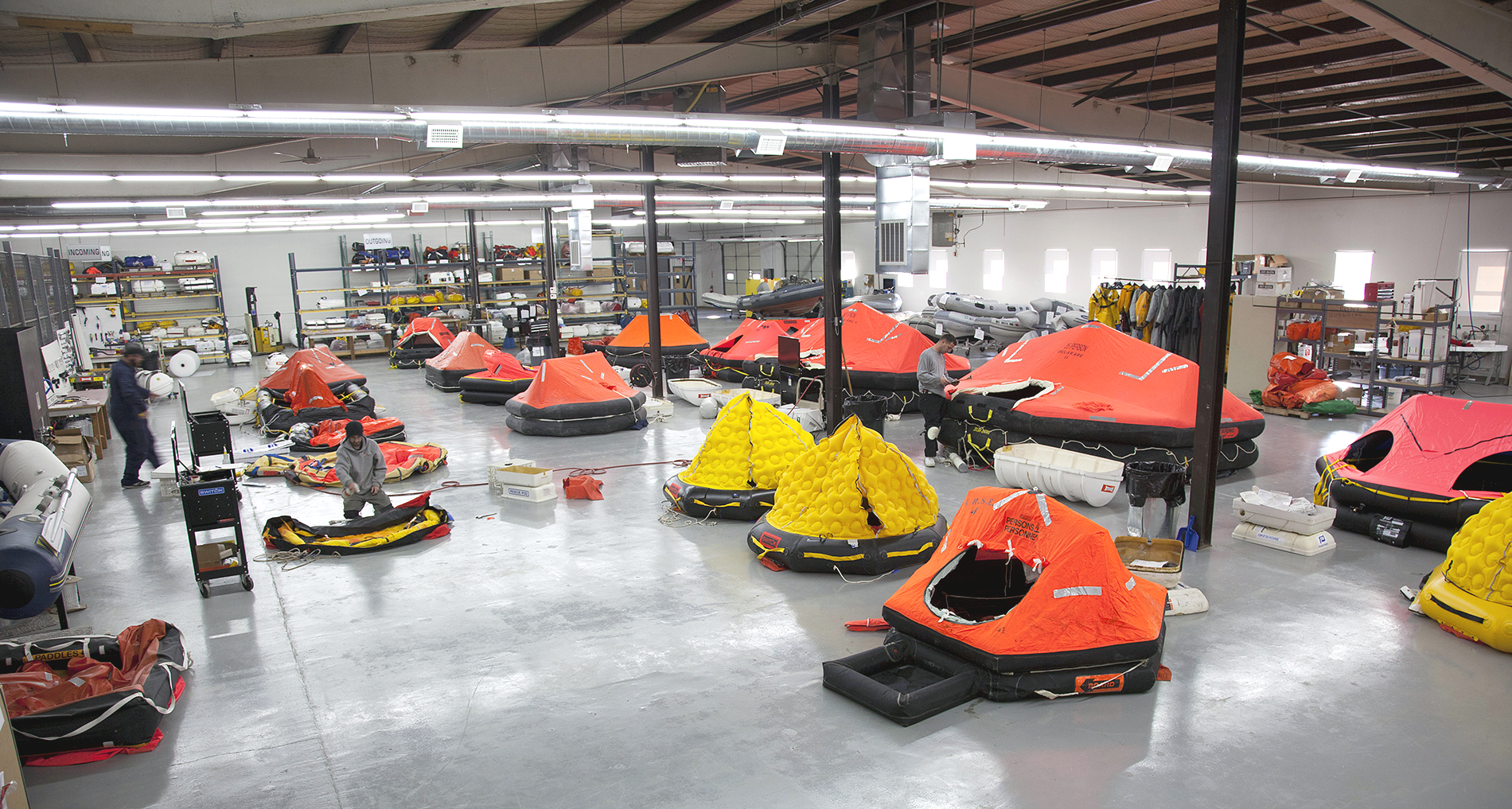
A life raft is the last piece of equipment any boater ever expects to use, with the assumption to likely never to see that boat above water again. Proper life raft service inspections ensures that your life raft will operate and perform as designed, and restore your confidence in open waters while increasing your raft's life expectancy.
Why should you service your raft, what could go wrong?
- Life raft could be leaking from porous, damaged or deteriorating fabric
- Open seam or seam tape separation could cause a visible leak
- CO2 cylinder might have a low charge or no charge at all
- Equipment might be damaged or expired
- Inflation system inlet valves or hoses could be corroded
- Manufacturers may issue service bulletins that require action taken at the next service
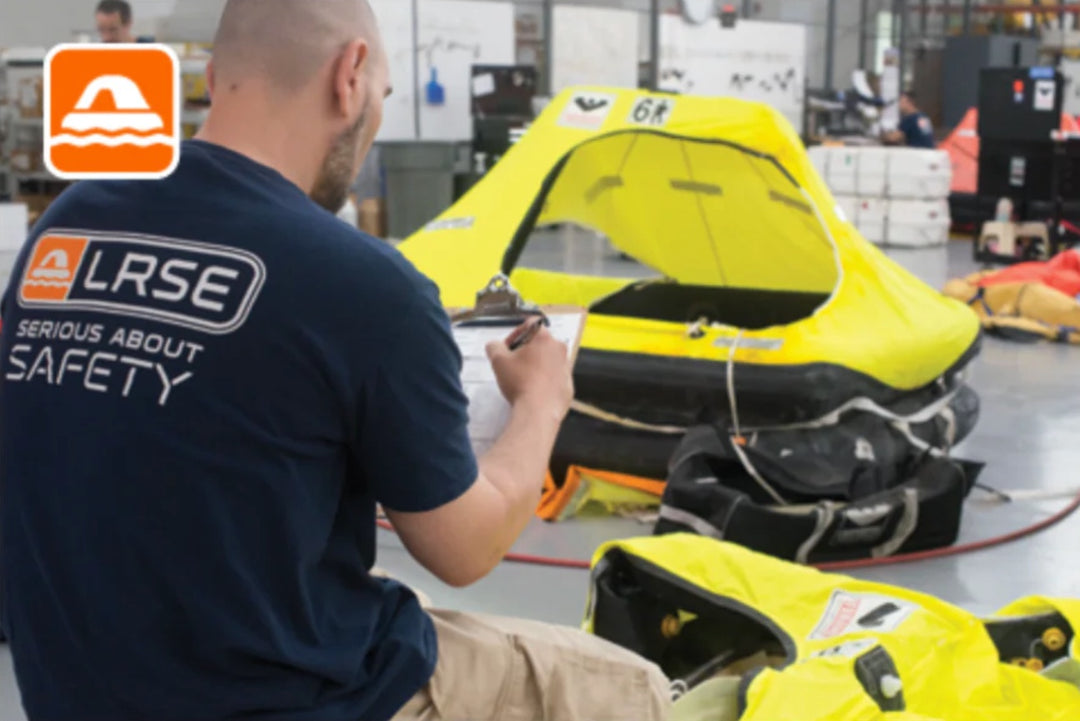
What can you do to make sure your raft is ready?
- If the raft is in a canister check to make sure the hydrostatic release (if applicable) is in date and installed correctly
- Check lashing to make sure it is in good working order
- Check hardware
- Periodically check that raft is tight and secure in cradle
FAQ's
Most life rafts require service every 1 to 3 years, depending on manufacturer guidelines, raft type, and regulatory requirements such as SOLAS or USCG standards. Regular servicing ensures the raft will deploy correctly in an emergency and remain compliant with safety regulations.
A full life raft service includes inflation testing, pressure retention checks, and detailed inspection of seams, valves, and structural integrity. Expired survival gear such as rations, water, and marine flares are replaced, and the raft is repacked to manufacturer specifications to ensure readiness for deployment.
Yes. For most commercial vessels and offshore operations, life raft inspections are required under SOLAS, USCG, or flag-state regulations. These rules ensure that safety equipment is regularly maintained, certified, and fully operational in case of emergency at sea.
Life raft servicing costs vary depending on raft size, type, and certification requirements. Pricing is influenced by inspection complexity, replacement of expired components, and repacking requirements, all of which ensure the raft remains fully compliant and ready for use.
If a life raft is not serviced on time, it may fail to deploy properly in an emergency or lose essential performance reliability. It can also become non-compliant with safety regulations, which may result in failed inspections or insurance issues.