


IMMERSION SUIT SERVICE
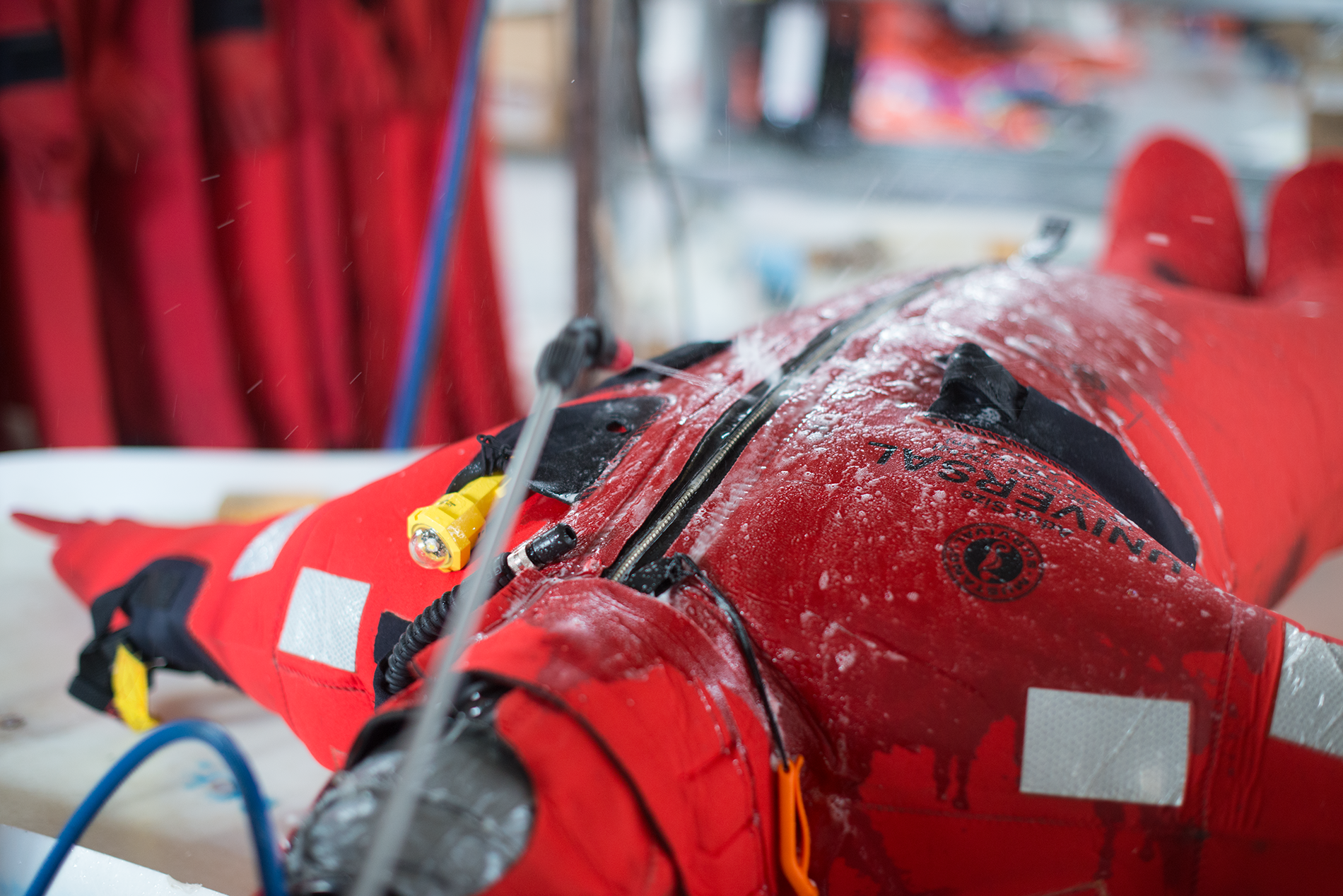
Any undetected damage of an immersion suit can compromise its performance. Make sure your marine rescue gear is operating at top condition by scheduling an immersion suit service with LRSE. Our technicians are highly qualified to conduct inspections, maintenance and repairs.
What does your immersion suit require so it will work when you need it?
You can survive in an immersion suit in extremely cold water for long periods of time. As an immersion suit gets older the fabric can break down naturally. Once the suit starts to deteriorate, buoyancy is lost. With age a suit's glue can deteriorate causing leaks.
At LRSE we can test the suit to make sure it will save your life. When we service an immersion suit we do a pressure test and look for leaks. We also lube up your zippers and perform small repairs.
Once a suit is old enough for repairs—approximately 12 years—it is probably time for a new suit.
What can you do to make sure your immersion suit is ready?
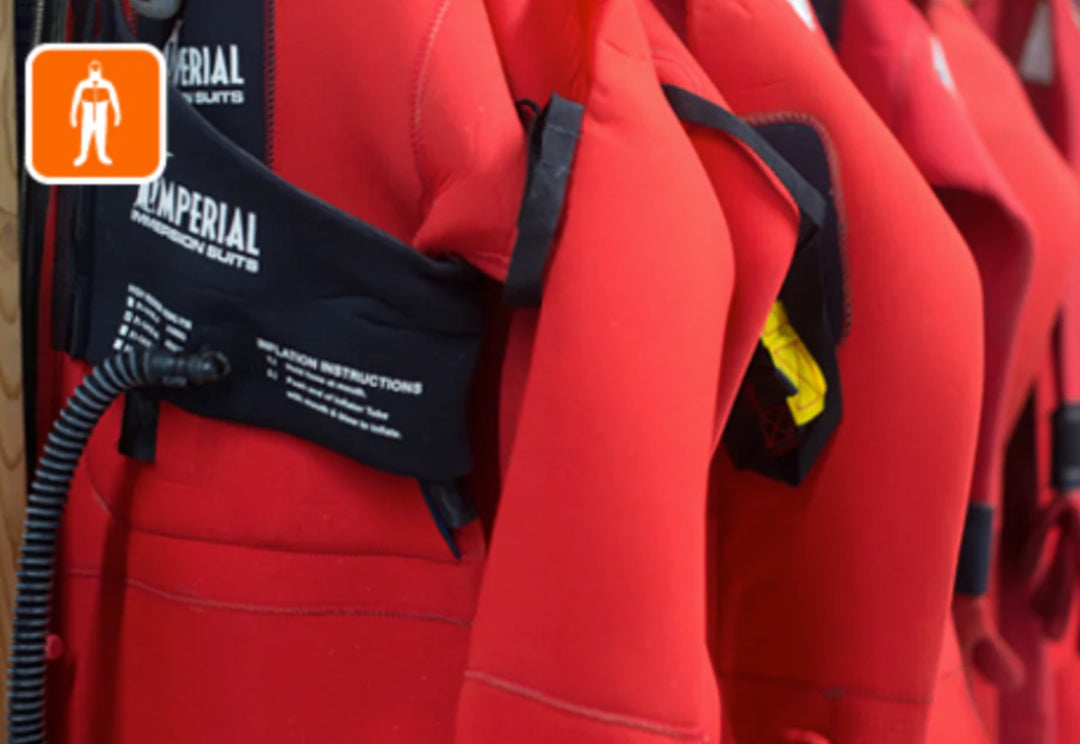
- Perform visual test
- Lube zippers
- Check that lights are in date
- Change batteries in lights (N/A if they do not have replaceable batteries)
- Check Personnel Marker Light (PML) dates
FAQs
Immersion suits should be visually inspected regularly and serviced according to manufacturer, SOLAS, and USCG requirements. Monthly onboard inspections and periodic professional servicing help ensure the suit remains operational and watertight.
Immersion suits are commonly pressure tested every three years to check for leaks, seam failures, and deterioration that may not be visible during routine inspections. Testing intervals may vary by manufacturer or regulatory requirements.
An immersion suit inspection may include pressure testing, leak detection, zipper lubrication, inspection of fabric and seams, light and battery checks, and evaluation of closures, seals, and accessories for wear or damage.
An immersion suit may fail inspection due to leaks, damaged seams, deteriorated fabric, failed zipper seals, expired lights, improper storage damage, or deterioration of adhesives and closures that affect watertight performance.
Yes. Minor repairs such as leak repair, zipper maintenance, and replacement of certain components can often be performed during servicing. Older suits with significant deterioration may need replacement instead of repair.
Yes. SOLAS and USCG regulations require immersion suits to undergo regular inspections, maintenance, and testing to help ensure they remain operational and compliant with maritime safety standards.International Maritime Organization, (IMO) recommends annual inspection, alternating between onboard crew inspection one year and on-shore service facility on alternate years.